
BLOG

Burnout, Just Rebranded

January 21, 2026
curved line

Mid-day naps. That’s it. That’s the idea.

Not exactly a groundbreaking innovation. The Spanish have been perfecting the siesta for centuries. Still, I found myself passionately, and only half-jokingly, pitching the value of mid-day naps during a team lunch last week.

At the time, it was a lighthearted comment about being tired only a couple of weeks into the new year. But the more I thought about it, the more I realized I wasn’t joking at all.

For years, organizations talk about change fatigue. Digital transformations piled up. New tools, new systems, new ways of working. Teams were asked to adapt, leaders were asked to champion the change, and everyone was promised that once we got through this initiative, things would finally get easier. But have they?

The tools are smarter… A LOT smarter.

The dashboards are prettier.  

The insights are faster.

We can report on everything and anything our hearts desire.

And yet, we are still exhausted.

Burnout didn’t go away. It just changed clothes and got a facelift.  

From Change Fatigue to Constant Catch-Up
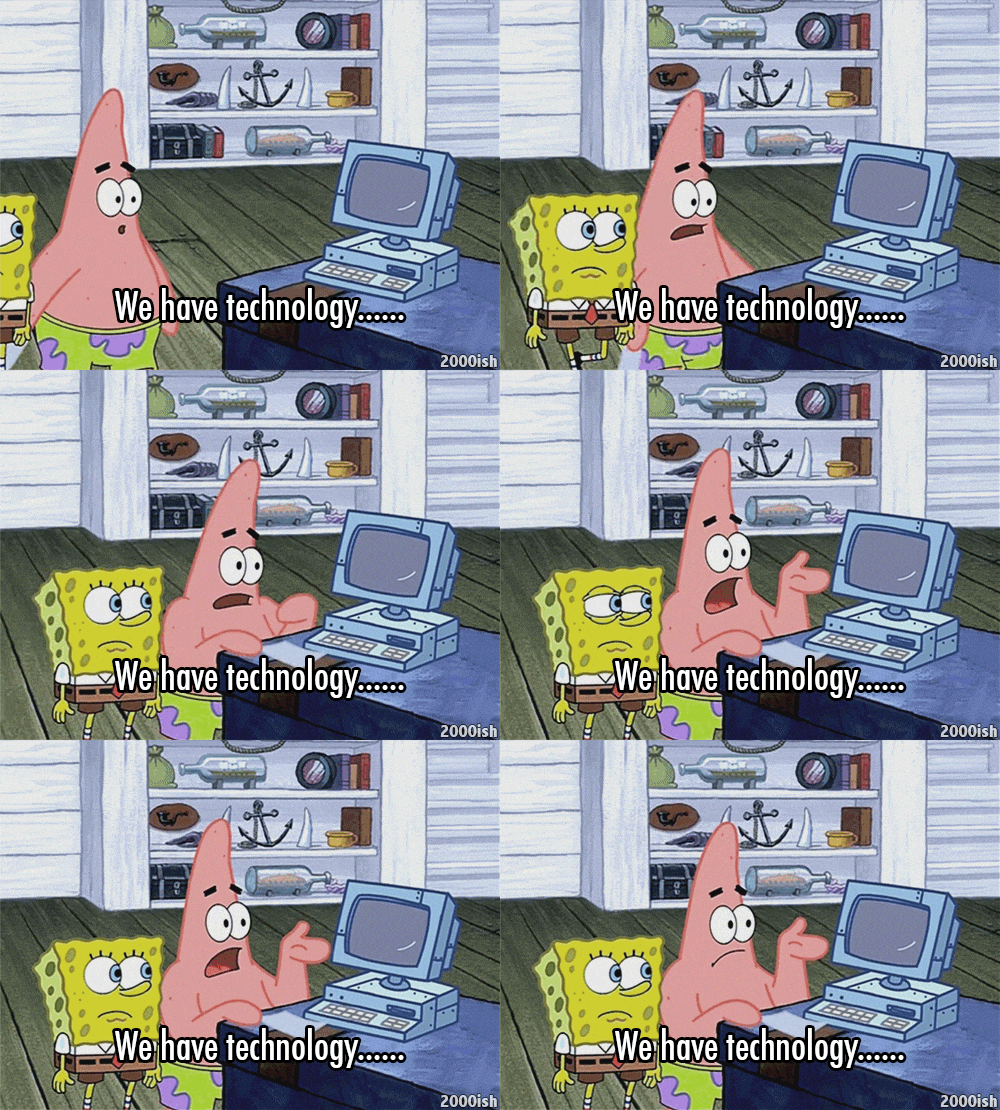
#computer #technology #internet #AI

A decade ago, burnout came from too many transformations at once.

Today, it comes from never being able to stop transforming.

AI adoption. Digital acceleration. Customer analytics. Real-time metrics. Personalization engines. Brand storytelling across platforms. New delivery expectations. New leadership models. New compliance demands.

Often all at the same time. (Ugh. I’m exhausted just listing those out, let alone thinking about how I’m supposed to apply it to my day or my team’s.)

Every new tool promises:

  • Greater efficiency
  • Better visibility
  • Smarter decisions
  • Faster delivery

And individually, many of them deliver. (Which on its own is honestly kind of wild. There was a time when tools weren’t expected to solve all of your problems, let alone solve them simultaneously. What happened to not being everything to everyone, all the time?)

Collectively, though, they create a new kind of strain. Not because teams are resistant or lazy. Not because leaders don’t care or aren’t trying to align. But because the pace has outgrown our ability to integrate any of it meaningfully.  

Behind all of these tools promising to save our organizations and propel us into the next generation are still humans. Human brains. Human behaviour. Human limits.

No matter how advanced the technology gets, organizations still need people. People who are expected to learn faster, decide quicker, communicate clearer, and adapt constantly, often without the space to actually integrate any of it.

The New Burnout Isn’t About Workload – It’s About Cognitive Overload

#funny #fail# taylorswift #treadmill #exercising

What do they say about solving a problem? The first step is admitting you have one. So, what’s the problem, what’s burning us out? It’s not just how much work there is. Every organization I’ve ever worked with is full of great people who work hard, and who eventually push through periods of work overload.

It’s more likely this:

  • Deciding which initiatives actually matter.
  • Keeping up with tools that evolve faster than roadmaps.
  • Translating data into stories customers understand.
  • Aligning brand, product, metrics, and technology in real time.
  • Feeling perpetually behind in a world where “new” becomes “obsolete” almost overnight.

And that overload doesn’t just sit quietly on a backlog or roadmap. It shows up in the expectations placed on people.

Leaders are expected to be visionary and operational.

Teams are expected to move fast and get it right.

Customers expect seamless, human experiences, powered by increasingly complex systems behind the scenes.

So, everyone is running. With bad ankle support.

No one feels caught up.

And the finish line keeps moving.  

That’s burnout, just rebranded.

The Cost of Pretending This Is Just “The New Normal”
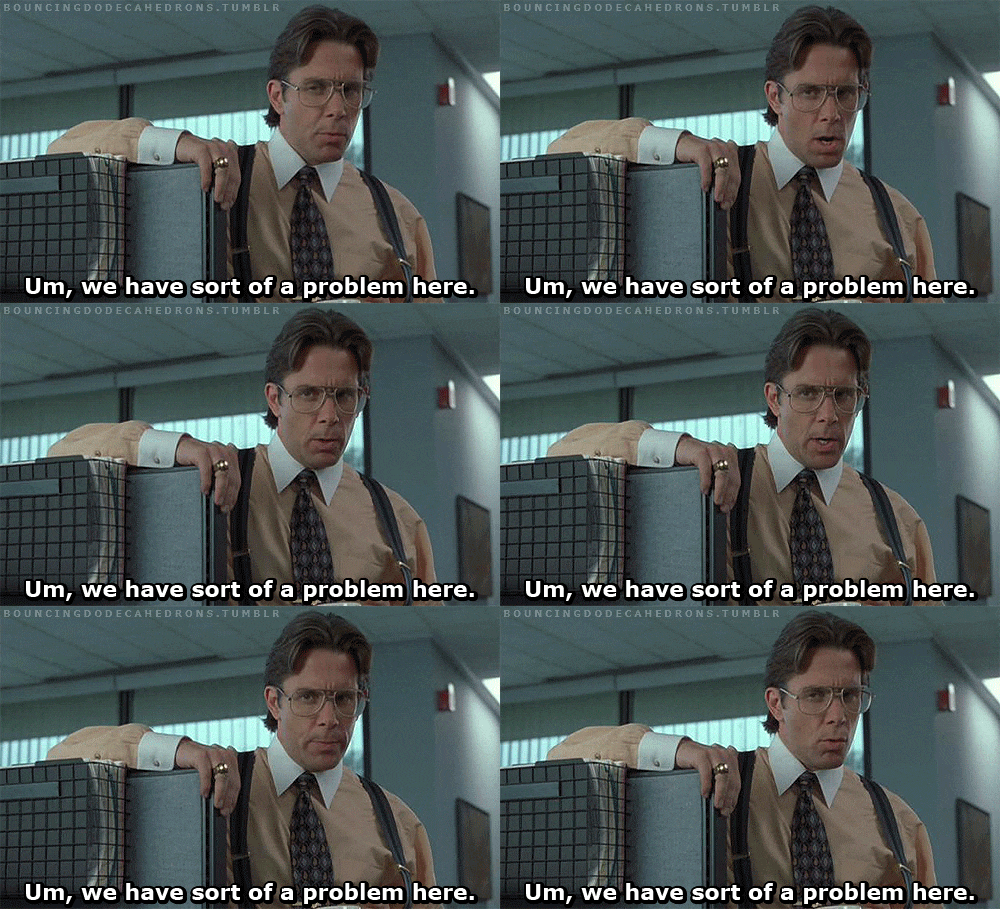
# reaction # officespace # garycole # billlumbergh

Here’s where things get a little dicey.

When everyone is burnt out, it starts to feel normal. It even starts to feel justified. If you’re not exhausted, the quiet assumption becomes that you’re not pushing hard enough, or not doing your job to its full extent. AI may be taking over more tasks, but let’s be clear: we’re not robots, we need to account for the psychology of work. Treating constant exhaustion as the baseline isn’t ambition. It’s unsustainable thinking. And historically, when organizations accept burnout as inevitable, some of the most important things start to quietly break.

  • Strategy becomes reactive, chasing trends instead of making choices.
  • Metrics multiply, but meaning gets lost.
  • Teams disengage, not from laziness, but from overload.
  • Leaders burn credibility, promising transformation benefits that never quite land.
  • Customers feel it, in inconsistent experiences and diluted messaging.

This isn’t a failure of effort or commitment.

It’s a system under strain.

And it requires a different response than “try harder” or “adopt faster.”

How IncrementOne Helps Organizations Address Modern Burnout

#reaction #happy #funny #cute #dog #dogs #teamwork

While the mid-day nap idea didn’t make it into practice (don’t worry I’ll wear them down eventually), the need it surfaced was very real.

At IncrementOne, we’ve spent years working with and coaching teams, leaders, and organizations through the very real challenges this pace of change creates. We believe the answer isn’t more effort or more tools, it’s better integration, clearer focus, and delivery models designed to actually support the people doing the work.

Here are three ways we help organizations address burnout in its modern form:

1. Reconnect People, Purpose, and Technology

Most organizations don’t suffer from a lack of data or technology. These things only create value when people understand how to use them and trust why it exists.

We work with leaders and teams to:

  • Translate data into narratives that make sense to humans.
  • Connect customer needs to internal priorities.
  • Design ways of working that support psychological safety and clarity.
  • Ensure AI, analytics, and digital tools support decisions, not replace thinking.

Burnout eases when people feel grounded in purpose, not buried under tools.

2. Prioritize What Matters – From Activity to Outcomes

Most organizations don’t struggle because they lack ideas or initiatives. They struggle because too many disconnected efforts are competing for attention, without a clear way to prioritize, align stakeholders, communicate intent, or manage bottlenecks.

At IncrementOne, we help leaders:

  • Clarify what actually matters now (not just what sounds impressive).
  • Align initiatives to a small number of meaningful, measurable outcomes.
  • Reduce competing work that no longer supports the strategy.
  • Create shared language between business, technology, and delivery.

Burnout eases when people aren’t just told why they’re working, but are given clarity, confidence, and permission to focus on what actually matters.

3. Shift from Speed Obsession to Sustainable Flow

Moving fast isn’t the same as moving well.  

Many teams are stuck in a cycle of urgency:

  • Short-term wins
  • Constant pivots
  • No time to stabilize or learn

We help organizations:

  • Design delivery systems that support flow, not frenzy.
  • Use metrics to guide decisions, not pressure people.
  • Build feedback loops that inform direction without overwhelming teams.
  • Create realistic expectations between leaders and delivery teams.

Speed without sustainability isn’t progress - it’s exhaustion.

Burnout Isn’t a Personal Failure – It’s a Design Signal

#thank you #office #theoffice #michaelscott #relief

If you aren’t burnt out from reading me blab on yet (pun intended), give me a minute to wrap this up. This is the part I don’t want you to miss.

If you or your teams are feeling the strain of burnout, try to remember this:

  • If your teams are tired, it doesn’t mean they’re weak.
  • If your leaders are stretched, it doesn’t mean they’re failing.
  • If your customers feel overwhelmed, it doesn’t mean your message is wrong.

It means your system needs recalibration.

Burnout today isn’t about resisting change. It’s about change happening faster than our systems, and our people, can realistically absorb.

And that’s something organizations can fix - by designing systems that help people and technology absorb change together, not in parallel chaos.

Subscriber Exclusives
Elevate YOUR agile game week by week. Join the community and get early access to our blog, newsletter, and special pricing!

Mid-day naps. That’s it. That’s the idea.

Not exactly a groundbreaking innovation. The Spanish have been perfecting the siesta for centuries. Still, I found myself passionately, and only half-jokingly, pitching the value of mid-day naps during a team lunch last week.

At the time, it was a lighthearted comment about being tired only a couple of weeks into the new year. But the more I thought about it, the more I realized I wasn’t joking at all.

For years, organizations talk about change fatigue. Digital transformations piled up. New tools, new systems, new ways of working. Teams were asked to adapt, leaders were asked to champion the change, and everyone was promised that once we got through this initiative, things would finally get easier. But have they?

The tools are smarter… A LOT smarter.

The dashboards are prettier.  

The insights are faster.

We can report on everything and anything our hearts desire.

And yet, we are still exhausted.

Burnout didn’t go away. It just changed clothes and got a facelift.  

From Change Fatigue to Constant Catch-Up

#computer #technology #internet #AI

A decade ago, burnout came from too many transformations at once.

Today, it comes from never being able to stop transforming.

AI adoption. Digital acceleration. Customer analytics. Real-time metrics. Personalization engines. Brand storytelling across platforms. New delivery expectations. New leadership models. New compliance demands.

Often all at the same time. (Ugh. I’m exhausted just listing those out, let alone thinking about how I’m supposed to apply it to my day or my team’s.)

Every new tool promises:

  • Greater efficiency
  • Better visibility
  • Smarter decisions
  • Faster delivery

And individually, many of them deliver. (Which on its own is honestly kind of wild. There was a time when tools weren’t expected to solve all of your problems, let alone solve them simultaneously. What happened to not being everything to everyone, all the time?)

Collectively, though, they create a new kind of strain. Not because teams are resistant or lazy. Not because leaders don’t care or aren’t trying to align. But because the pace has outgrown our ability to integrate any of it meaningfully.  

Behind all of these tools promising to save our organizations and propel us into the next generation are still humans. Human brains. Human behaviour. Human limits.

No matter how advanced the technology gets, organizations still need people. People who are expected to learn faster, decide quicker, communicate clearer, and adapt constantly, often without the space to actually integrate any of it.

The New Burnout Isn’t About Workload – It’s About Cognitive Overload

#funny #fail# taylorswift #treadmill #exercising

What do they say about solving a problem? The first step is admitting you have one. So, what’s the problem, what’s burning us out? It’s not just how much work there is. Every organization I’ve ever worked with is full of great people who work hard, and who eventually push through periods of work overload.

It’s more likely this:

  • Deciding which initiatives actually matter.
  • Keeping up with tools that evolve faster than roadmaps.
  • Translating data into stories customers understand.
  • Aligning brand, product, metrics, and technology in real time.
  • Feeling perpetually behind in a world where “new” becomes “obsolete” almost overnight.

And that overload doesn’t just sit quietly on a backlog or roadmap. It shows up in the expectations placed on people.

Leaders are expected to be visionary and operational.

Teams are expected to move fast and get it right.

Customers expect seamless, human experiences, powered by increasingly complex systems behind the scenes.

So, everyone is running. With bad ankle support.

No one feels caught up.

And the finish line keeps moving.  

That’s burnout, just rebranded.

The Cost of Pretending This Is Just “The New Normal”

# reaction # officespace # garycole # billlumbergh

Here’s where things get a little dicey.

When everyone is burnt out, it starts to feel normal. It even starts to feel justified. If you’re not exhausted, the quiet assumption becomes that you’re not pushing hard enough, or not doing your job to its full extent. AI may be taking over more tasks, but let’s be clear: we’re not robots, we need to account for the psychology of work. Treating constant exhaustion as the baseline isn’t ambition. It’s unsustainable thinking. And historically, when organizations accept burnout as inevitable, some of the most important things start to quietly break.

  • Strategy becomes reactive, chasing trends instead of making choices.
  • Metrics multiply, but meaning gets lost.
  • Teams disengage, not from laziness, but from overload.
  • Leaders burn credibility, promising transformation benefits that never quite land.
  • Customers feel it, in inconsistent experiences and diluted messaging.

This isn’t a failure of effort or commitment.

It’s a system under strain.

And it requires a different response than “try harder” or “adopt faster.”

How IncrementOne Helps Organizations Address Modern Burnout

#reaction #happy #funny #cute #dog #dogs #teamwork

While the mid-day nap idea didn’t make it into practice (don’t worry I’ll wear them down eventually), the need it surfaced was very real.

At IncrementOne, we’ve spent years working with and coaching teams, leaders, and organizations through the very real challenges this pace of change creates. We believe the answer isn’t more effort or more tools, it’s better integration, clearer focus, and delivery models designed to actually support the people doing the work.

Here are three ways we help organizations address burnout in its modern form:

1. Reconnect People, Purpose, and Technology

Most organizations don’t suffer from a lack of data or technology. These things only create value when people understand how to use them and trust why it exists.

We work with leaders and teams to:

  • Translate data into narratives that make sense to humans.
  • Connect customer needs to internal priorities.
  • Design ways of working that support psychological safety and clarity.
  • Ensure AI, analytics, and digital tools support decisions, not replace thinking.

Burnout eases when people feel grounded in purpose, not buried under tools.

2. Prioritize What Matters – From Activity to Outcomes

Most organizations don’t struggle because they lack ideas or initiatives. They struggle because too many disconnected efforts are competing for attention, without a clear way to prioritize, align stakeholders, communicate intent, or manage bottlenecks.

At IncrementOne, we help leaders:

  • Clarify what actually matters now (not just what sounds impressive).
  • Align initiatives to a small number of meaningful, measurable outcomes.
  • Reduce competing work that no longer supports the strategy.
  • Create shared language between business, technology, and delivery.

Burnout eases when people aren’t just told why they’re working, but are given clarity, confidence, and permission to focus on what actually matters.

3. Shift from Speed Obsession to Sustainable Flow

Moving fast isn’t the same as moving well.  

Many teams are stuck in a cycle of urgency:

  • Short-term wins
  • Constant pivots
  • No time to stabilize or learn

We help organizations:

  • Design delivery systems that support flow, not frenzy.
  • Use metrics to guide decisions, not pressure people.
  • Build feedback loops that inform direction without overwhelming teams.
  • Create realistic expectations between leaders and delivery teams.

Speed without sustainability isn’t progress - it’s exhaustion.

Burnout Isn’t a Personal Failure – It’s a Design Signal

#thank you #office #theoffice #michaelscott #relief

If you aren’t burnt out from reading me blab on yet (pun intended), give me a minute to wrap this up. This is the part I don’t want you to miss.

If you or your teams are feeling the strain of burnout, try to remember this:

  • If your teams are tired, it doesn’t mean they’re weak.
  • If your leaders are stretched, it doesn’t mean they’re failing.
  • If your customers feel overwhelmed, it doesn’t mean your message is wrong.

It means your system needs recalibration.

Burnout today isn’t about resisting change. It’s about change happening faster than our systems, and our people, can realistically absorb.

And that’s something organizations can fix - by designing systems that help people and technology absorb change together, not in parallel chaos.

Interested in becoming a catalyst for positive change in your organization?