BLOG

Olympic lessons: the power of performing on your own terms

February 25, 2026
curved line

If you are anything like me, every Olympic year I tell myself I won’t get sucked in.

I tell myself that I hope the athletes all have fun and perform well (especially Canada, obviously), but I’m not as into sports as I once was. It’s time consuming. I don’t know all the rules. I don’t really care. And then, like clockwork, I turn on the opening ceremonies “just to see the outfits”. Suddenly I’m FULLY invested. I’m watching sports I’ve never shown interest in before. I’m googling scoring systems at midnight. I’m cheering. I’m crying. I’m emotionally attached to men and woman I had never heard of two days prior.  

Now let me be frank. Was I bummed about Canada’s gold medal hockey losses? Yes. However, my soul was nowhere near crushed because just three days before that game even happened, something else completely captured me, and my favourite Olympic moment of 2026 solidified.  

It was watching a 20-year-old American figure skater show the world what happens when you love what you do, and lead with it.
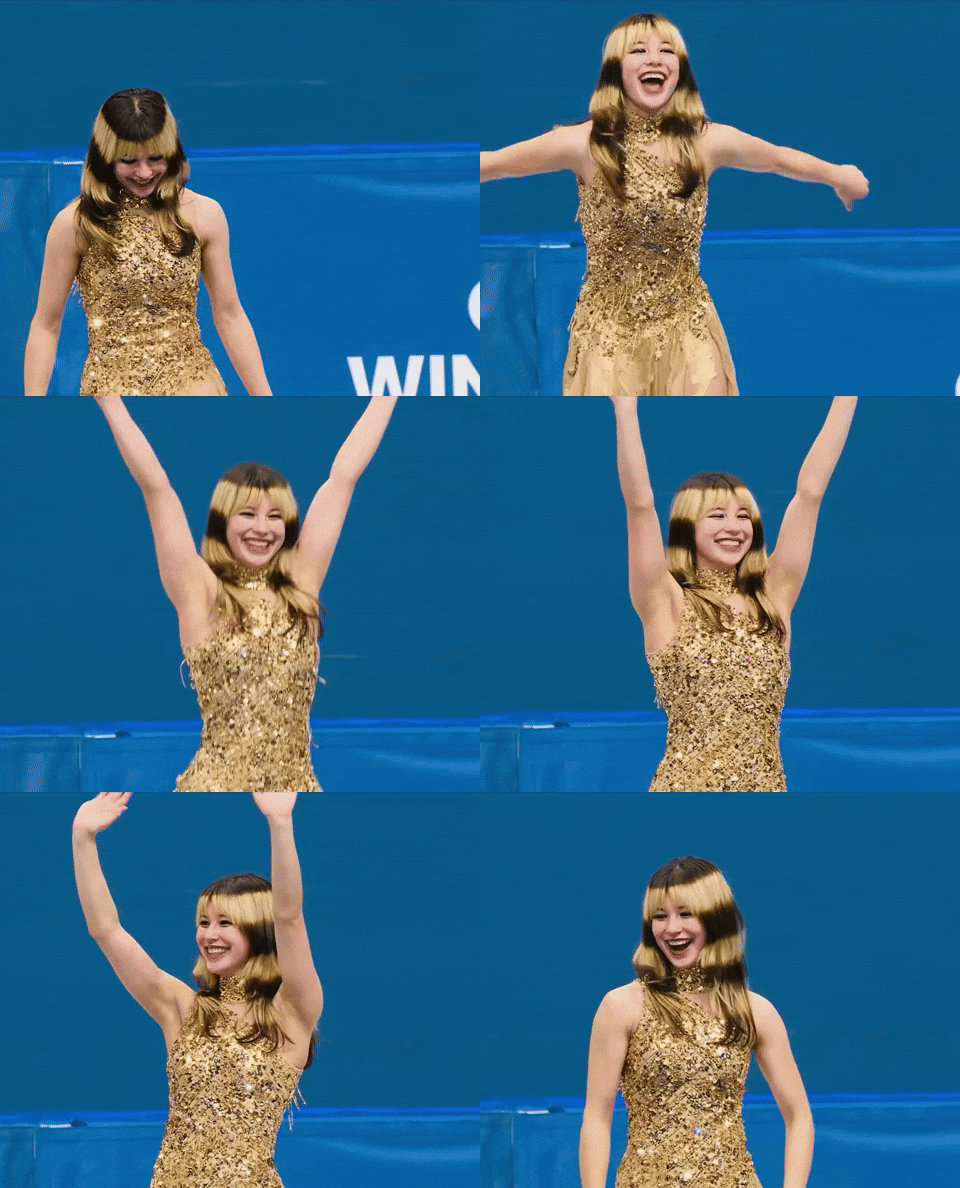
When Alysa Liu stepped onto that Olympic ice in Milano and delivered both her short and long program gold-medal performances, they weren’t just technically strong. They were powerful. Controlled. Grounded. Free.  

And that’s what made it different. Because not long before these Olympic games, Alysa had walked away from figure skating entirely. Not because she wasn’t talented. Not because she wasn’t capable. But because the pressure, expectations, and identity weight had become too heavy.  

For those who may not know her story, Alysa wasn’t just “another skate”. She was a prodigy. She became the youngest U.S. women’s national champion in decades. She was landing triple axels and quadruple jumps as a young teenager. She was labeled “the future of American figure skating” before she could legally vote. And then, at just 16 years old, after competing on the world stage and already accomplishing what many athletes spend a lifetime chasing, she retired. She simply said she was done. Burnt out. Tired. Ready to live a normal teenage life. Ready to figure out who she was outside of the rink.

And in a sports culture that glorifies pushing through at all costs, that decision was radical.

Two years later, at 18, Alysa made the decision to return to competitive figure skating, with one very clear caveat: her return would be fully on her terms. She was coming back because she loved to skate and she missed it. And if she ever lost that feeling again, she wouldn’t push through it. She wouldn’t force it. This time, she would have creative control over her music, choreography, outfits, training, her body. She would dictate her diet, her workouts, her practice time. And that changed everything.

She wasn’t skating to protect a reputation.

She wasn’t skating to fulfill projections.

She wasn’t skating to carry a country’s hope.

She was skating because she wanted to, because she loved it.

There is a profound difference between performing because you have to, and performing because you choose to.

And you could see it in Milano. The happiness, the presence, the absence of stress. It was pure joy. The gold medal was the outcome. But the freedom, the experience, that was her story.

If you think this story is just about figure skating, it’s not. Organizations are living this exact tension right now. Over the last decade, many organizations have scaled fast, transformed quickly, adopted new frameworks, restructured teams, implemented tools, and chased modernization.

Some of that was necessary. Some of it was smart. But much of it was driven by pressure. Pressure to keep up, pressure to innovative, pressure to not fall behind, pressure from boards, from markets, from customers. And when pressure becomes the primary motivator, performance changes.

Decision-making tightens.

Creativity narrows.

Risk tolerance drops.

People operate defensively.

Just like Alysa in her early career, organizations can become incredibly successful while quietly burning out.

They deliver.

They hit targets.

They “transform”.

But they are skating to avoid falling, not because they love the movement.

And here is the lesson.

The breakthrough didn’t happen when Alysa added more technical difficulty, she didn’t even attempt the triple axel in these Olympics. Her success happened when she reclaimed her agency and her joy. When she chose the conditions under which she would perform. When she reconnected to why she was there in the first place. When she gave herself permission to walk away again if it stopped being aligned.

Organizations can learn three powerful things from this:  

1. Autonomy fuels sustainable performance.

People and teams perform differently when they feel ownership over how they work, not just accountability for outcomes.

2. Identity matters more than optics.

Are you transforming because it aligns with your strategic intent? Or because you feel you should?  

When organizations lose sight of who they are, their purpose, their strengths, their constraints, they start borrowing identities from the market. They adopt language that isn’t theirs. They implement practices that don’t fit. They perform agility instead of living it.

Just like an athlete skating someone else’s choreography, it may look impressive, but it won’t feel natural, and it won’t be sustainable.

3. Stepping back is not weakness. It is recalibration.

High-performing cultures often mistake endurance for strength. They push through fatigue. They layer initiative on initiative. They reward momentum over reflection.

But sustainable performance requires intentional pause.

Sometimes the bravest move is slowing down long enough to redesign how decisions are made, how work flows, and how success is measured.

The organizations that will thrive in the next decade won’t be the ones that never struggled. They will be the ones that paused long enough to redefine the terms under which they operate. Just like Alysa did.

How Can IncrementOne Support?

At IncrementOne, this is the work we are invited into every day. Not to install another framework. Not to layer in more process. But to create the conditions for recalibration. Through honest discovery, leadership alignment, and deliberate operating design, we help organizations step off the ice long enough to ask the harder questions: Who are we? Why are we working this way? What are we optimizing for? And most importantly, are we choosing this? Peak performance doesn’t come from pushing harder. It comes from operating with clarity, agency, and intention. That’s where performance shifts from pressure-driven to purpose-led.

Closing Ceremonies (or thoughts)…

You can chase medals your whole career and never feel fulfilled. OR you can love the work you do and let the results follow. Organizations that contort themselves to meet every external expectation will burn out before they ever reach the podium. The ones that know who they are, and build from that place and return to that place when they feel out of alignment, are the ones still standing when it matters most.

Don’t skate for the noise.

Skate because you mean it.

That’s where gold lives.  

Subscriber Exclusives
Elevate YOUR agile game week by week. Join the community and get early access to our blog, newsletter, and special pricing!

If you are anything like me, every Olympic year I tell myself I won’t get sucked in.

I tell myself that I hope the athletes all have fun and perform well (especially Canada, obviously), but I’m not as into sports as I once was. It’s time consuming. I don’t know all the rules. I don’t really care. And then, like clockwork, I turn on the opening ceremonies “just to see the outfits”. Suddenly I’m FULLY invested. I’m watching sports I’ve never shown interest in before. I’m googling scoring systems at midnight. I’m cheering. I’m crying. I’m emotionally attached to men and woman I had never heard of two days prior.  

Now let me be frank. Was I bummed about Canada’s gold medal hockey losses? Yes. However, my soul was nowhere near crushed because just three days before that game even happened, something else completely captured me, and my favourite Olympic moment of 2026 solidified.  

It was watching a 20-year-old American figure skater show the world what happens when you love what you do, and lead with it.

When Alysa Liu stepped onto that Olympic ice in Milano and delivered both her short and long program gold-medal performances, they weren’t just technically strong. They were powerful. Controlled. Grounded. Free.  

And that’s what made it different. Because not long before these Olympic games, Alysa had walked away from figure skating entirely. Not because she wasn’t talented. Not because she wasn’t capable. But because the pressure, expectations, and identity weight had become too heavy.  

For those who may not know her story, Alysa wasn’t just “another skate”. She was a prodigy. She became the youngest U.S. women’s national champion in decades. She was landing triple axels and quadruple jumps as a young teenager. She was labeled “the future of American figure skating” before she could legally vote. And then, at just 16 years old, after competing on the world stage and already accomplishing what many athletes spend a lifetime chasing, she retired. She simply said she was done. Burnt out. Tired. Ready to live a normal teenage life. Ready to figure out who she was outside of the rink.

And in a sports culture that glorifies pushing through at all costs, that decision was radical.

Two years later, at 18, Alysa made the decision to return to competitive figure skating, with one very clear caveat: her return would be fully on her terms. She was coming back because she loved to skate and she missed it. And if she ever lost that feeling again, she wouldn’t push through it. She wouldn’t force it. This time, she would have creative control over her music, choreography, outfits, training, her body. She would dictate her diet, her workouts, her practice time. And that changed everything.

She wasn’t skating to protect a reputation.

She wasn’t skating to fulfill projections.

She wasn’t skating to carry a country’s hope.

She was skating because she wanted to, because she loved it.

There is a profound difference between performing because you have to, and performing because you choose to.

And you could see it in Milano. The happiness, the presence, the absence of stress. It was pure joy. The gold medal was the outcome. But the freedom, the experience, that was her story.

If you think this story is just about figure skating, it’s not. Organizations are living this exact tension right now. Over the last decade, many organizations have scaled fast, transformed quickly, adopted new frameworks, restructured teams, implemented tools, and chased modernization.

Some of that was necessary. Some of it was smart. But much of it was driven by pressure. Pressure to keep up, pressure to innovative, pressure to not fall behind, pressure from boards, from markets, from customers. And when pressure becomes the primary motivator, performance changes.

Decision-making tightens.

Creativity narrows.

Risk tolerance drops.

People operate defensively.

Just like Alysa in her early career, organizations can become incredibly successful while quietly burning out.

They deliver.

They hit targets.

They “transform”.

But they are skating to avoid falling, not because they love the movement.

And here is the lesson.

The breakthrough didn’t happen when Alysa added more technical difficulty, she didn’t even attempt the triple axel in these Olympics. Her success happened when she reclaimed her agency and her joy. When she chose the conditions under which she would perform. When she reconnected to why she was there in the first place. When she gave herself permission to walk away again if it stopped being aligned.

Organizations can learn three powerful things from this:  

1. Autonomy fuels sustainable performance.

People and teams perform differently when they feel ownership over how they work, not just accountability for outcomes.

2. Identity matters more than optics.

Are you transforming because it aligns with your strategic intent? Or because you feel you should?  

When organizations lose sight of who they are, their purpose, their strengths, their constraints, they start borrowing identities from the market. They adopt language that isn’t theirs. They implement practices that don’t fit. They perform agility instead of living it.

Just like an athlete skating someone else’s choreography, it may look impressive, but it won’t feel natural, and it won’t be sustainable.

3. Stepping back is not weakness. It is recalibration.

High-performing cultures often mistake endurance for strength. They push through fatigue. They layer initiative on initiative. They reward momentum over reflection.

But sustainable performance requires intentional pause.

Sometimes the bravest move is slowing down long enough to redesign how decisions are made, how work flows, and how success is measured.

The organizations that will thrive in the next decade won’t be the ones that never struggled. They will be the ones that paused long enough to redefine the terms under which they operate. Just like Alysa did.

How Can IncrementOne Support?

At IncrementOne, this is the work we are invited into every day. Not to install another framework. Not to layer in more process. But to create the conditions for recalibration. Through honest discovery, leadership alignment, and deliberate operating design, we help organizations step off the ice long enough to ask the harder questions: Who are we? Why are we working this way? What are we optimizing for? And most importantly, are we choosing this? Peak performance doesn’t come from pushing harder. It comes from operating with clarity, agency, and intention. That’s where performance shifts from pressure-driven to purpose-led.

Closing Ceremonies (or thoughts)…

You can chase medals your whole career and never feel fulfilled. OR you can love the work you do and let the results follow. Organizations that contort themselves to meet every external expectation will burn out before they ever reach the podium. The ones that know who they are, and build from that place and return to that place when they feel out of alignment, are the ones still standing when it matters most.

Don’t skate for the noise.

Skate because you mean it.

That’s where gold lives.  

Interested in becoming a catalyst for positive change in your organization?