BLOG

Don’t Be a Pick-Me (Unless Your Customers Actually Pick You)

February 10, 2026
curved line

Hey IncrementOne chat! Count your lucky chickens, because your favourite personality hire is back with another Friday afternoon thought spiral that absolutely refuses to stay inside my head.

And yes, this is the part where I turn that spiral into a blog post instead of pretending that I don’t enjoy having an audience. Call it Pick-Me energy if you want.  

WAIT! What’s that you ask? What’s a Pick-Me?

#jimmyfallon #me #fallontonight #tonightshow #pickme

If you haven’t consciously heard this term before, you’ve definitely encountered it. Subconsciously, instinctively, painfully, maybe even unintentionally.

You’ve rolled your eyes at it.

You may have suffered at the hands of it.

And if we’re being really honest…you might have even been one. *GASP*

While the term “Pick-Me” was coined by our ever-loving Gen Zs, the concept has been around since the dark ages. A Pick-Me is someone over-performing for approval, trying to be chosen, validated, or seen as the exception. Not always loudly. Not always intentionally. Sometimes it shows up as over-agreeing, over-explaining, over-delivering, or bending just a little too far to be liked. Other times, it looks like taking things personally that were never personal in the first place, just to feel safe.

This kind of performative behaviour is designed to get attention without actually reading the room. Which either works briefly, or makes you deeply unpopular. You know the type. You’ve seen the type. You’ve probably been the type. But please don’t get it twisted: Pick-Me's aren’t disliked because they want to be chosen. We all want to be chosen and noticed, I won’t shame you for that. Pick-Me's are disliked because they try to be chosen by performing, not by connecting.

WAIT! I know what you’re going to ask… What in the world could I possibly be ranting about Pick-Me's for, in a job where I spend my time working with organizations navigating change, transformation, and complex blah blah blah?

Simple.

Organizations are the biggest Pick-Me's.

#sports #sport #smile #nfl #me #lookatme #whome

In business, Pick-Me behaviour shows up when organizations chase attention instead of relevance. It looks like trend-hopping without context, over-engineered solutions to the wrong problems, and constant messaging about how innovative, customer-centric, or different they are, without actually demonstrating it. It’s organizations shouting, “Look at us!” instead of pausing to ask, “What problem are you actually trying to solve right now?” and “Who do you need beside you to solve it?”.

Customers don’t ignore Pick-Me organizations because they’re boring. They opt out because the connection doesn’t feel real.  

And it may have taken an entire page to get here, but this is where my point is starting to form: Being chosen isn’t about trying harder. It’s about knowing better.
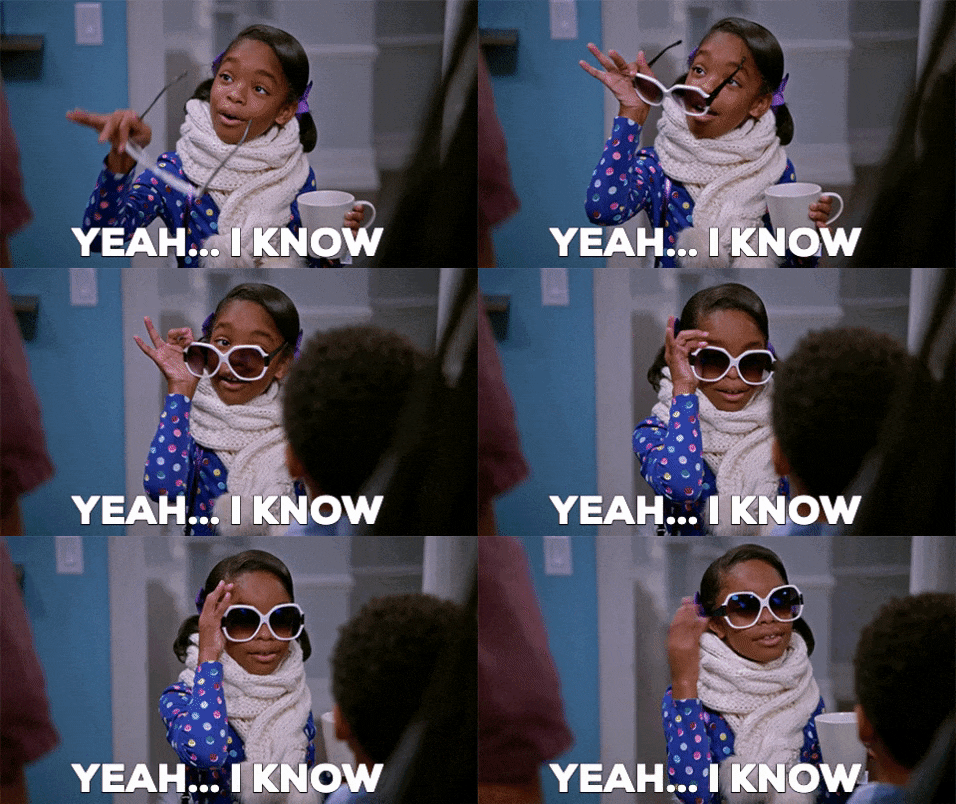
#reaction #yeah #right #fabulous #iknow #iwasright #iwas #yeahiknow

This is why knowing your customers matters, not as a tactic, but as a posture. When organizations genuinely understand their customers’ realities, they stop with the Pick-Me performance vibes. They stop guessing. They stop trying to be everything to everyone. Decisions feel grounded because they’re responding to real needs, constraints, and context, not assumptions or internal narratives.  

When you truly know your customers, their frustrations, habits, trade-offs, and constraints, you don’t have to beg for attention. Your work resonates. Your decisions make sense. Your offerings feel intuitive because they’re rooted in understanding, not vibes.

The problem is that as organizations grow, they drift. Teams get further away from customers, buffered by process, tools, and layers of decision-making. Personas get created and then forgotten. Metrics replace meaning. Suddenly, teams are working hard but guessing. And guessing turns into Pick-Me behaviour real fast.

So how do organizations use their Pick-Me powers for good and not evil? (Yes, this exists.) They listen.

1. Teams that know their customers well talk to them regularly. Not just through surveys, but through real conversations. They share what they learn openly across roles. They look for patterns, not just requests. And most importantly, they let customer insight change what they work on and how they work.
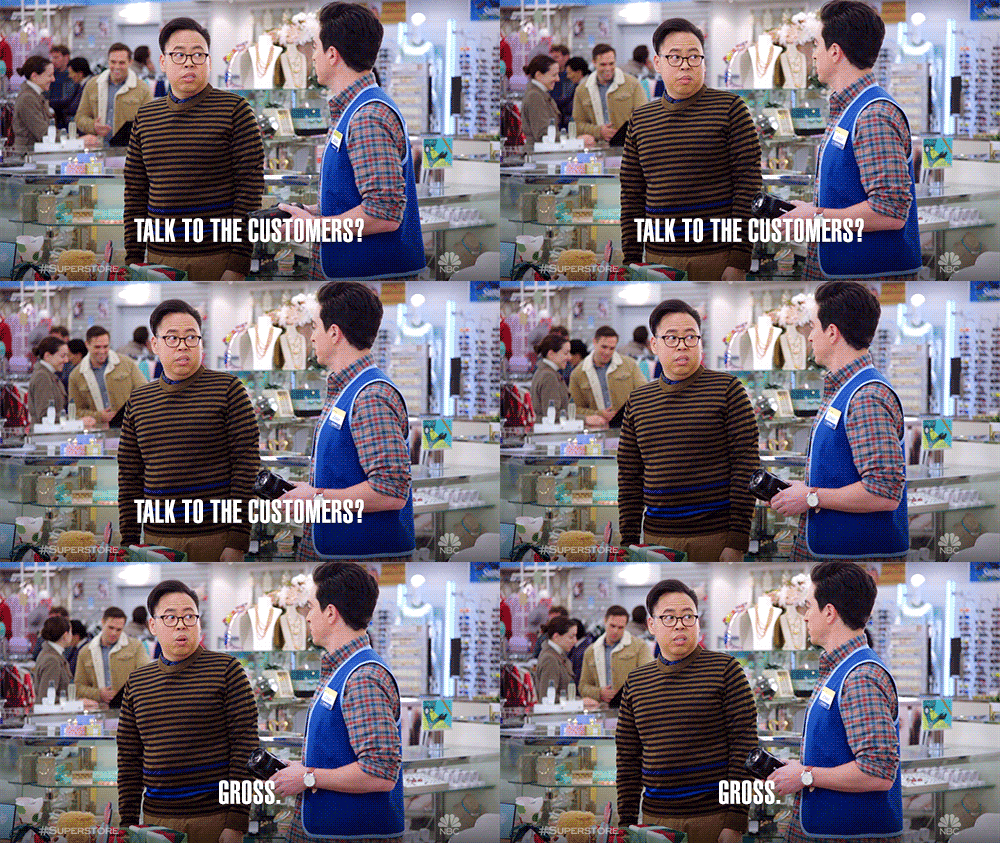
#nbc #retail #superstore #talktothecustomers

2. They listen for constraints, not requests. Strong teams don’t just collect feature requests; they listen for the constraints hiding underneath them. They pay attention to what customers can’t do, won’t do, or are actively working around. Constraints reveal that reality, budgets, time, risk tolerance, internal politics, and reality are far more useful than wish lists when deciding what to build or change.

3. They understand the customer’s journey, not just the moment of purchase. Organizations that truly know their customers understand where their product or service fits into a much bigger picture. They look beyond the transaction to see the full workflow, lifecycle, or lived experience surrounding it. That context explains why certain decisions feel hard, why workarounds exist, and why “simple” changes often aren’t simple at all.

#lost #map #direction #muppets #kermit #kermitthefrog

4. They understand decision-making dynamics and emotional signals. Purchasing is psychological, no doubt about it. Knowing your customer means understanding who actually decides, who influences, who delays, who blocks, or who ultimately lives with the consequences. Effective teams pay attention to both power dynamics and emotional cues: frustration, hesitation, relief, anxiety, confidence. Those signals often tell you more about success and risk than any satisfaction score ever will.

5. They know what customers compare them against. Customers are always comparing you to something: competitors, substitutes, internal processes, or the option of doing nothing at all. Organizations that understand this don’t obsess over being “best in class”; they focus on being the best choice in their customer’s real decision context. That clarity shapes smarter positioning, better trade-offs, and more honest messaging.
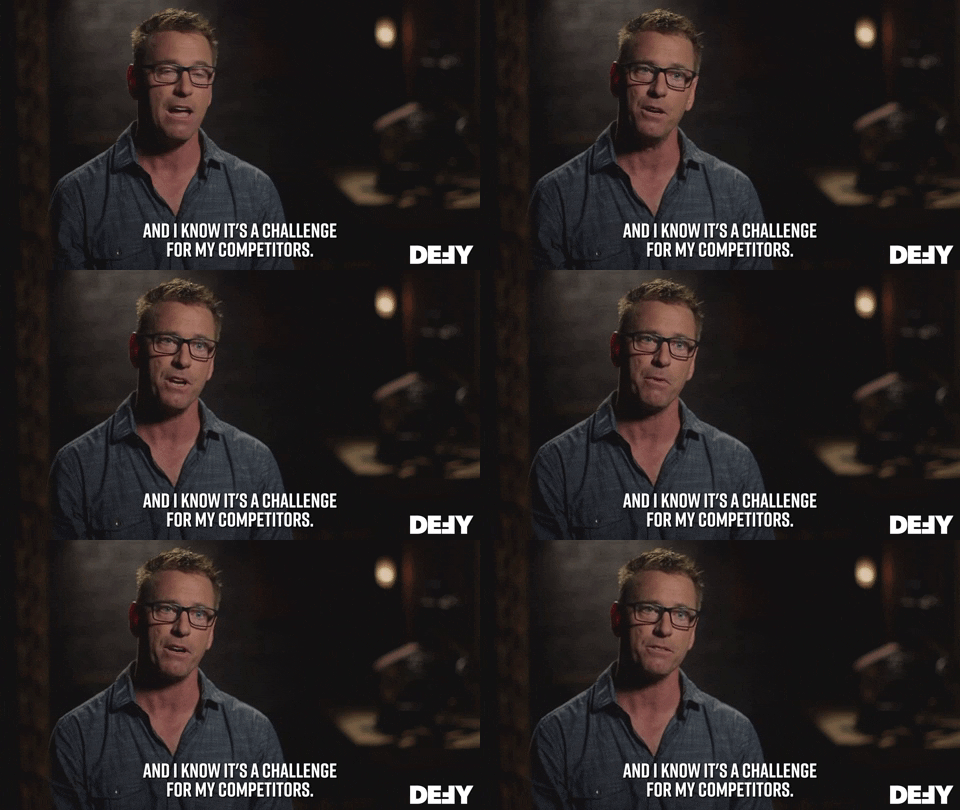
#challenge #competition #defy #defytvnetwork #competitive #forgedinfire #bladesmiths #competitors

Now, here’s the twist you Pick-Me's didn’t see coming… customers want to pick you. They just don’t want to be chased by someone who doesn’t understand them. I promise you, when organizations do these things consistently, something shifts. You stop guessing. You stop feeling like you’re putting on a disingenuous performance. And you start earning attention instead of chasing it.

Over time, doing this work builds trust, not all at once, not loudly, but steadily. And that trust compounds. It shows up in clearer decisions, stronger relationships, and customers who stay not because you’re flashy, but because you’re relevant.

So yes... be a Pick-Me.

Just be the kind worth picking.

Subscriber Exclusives
Elevate YOUR agile game week by week. Join the community and get early access to our blog, newsletter, and special pricing!

Hey IncrementOne chat! Count your lucky chickens, because your favourite personality hire is back with another Friday afternoon thought spiral that absolutely refuses to stay inside my head.

And yes, this is the part where I turn that spiral into a blog post instead of pretending that I don’t enjoy having an audience. Call it Pick-Me energy if you want.  

WAIT! What’s that you ask? What’s a Pick-Me?

#jimmyfallon #me #fallontonight #tonightshow #pickme

If you haven’t consciously heard this term before, you’ve definitely encountered it. Subconsciously, instinctively, painfully, maybe even unintentionally.

You’ve rolled your eyes at it.

You may have suffered at the hands of it.

And if we’re being really honest…you might have even been one. *GASP*

While the term “Pick-Me” was coined by our ever-loving Gen Zs, the concept has been around since the dark ages. A Pick-Me is someone over-performing for approval, trying to be chosen, validated, or seen as the exception. Not always loudly. Not always intentionally. Sometimes it shows up as over-agreeing, over-explaining, over-delivering, or bending just a little too far to be liked. Other times, it looks like taking things personally that were never personal in the first place, just to feel safe.

This kind of performative behaviour is designed to get attention without actually reading the room. Which either works briefly, or makes you deeply unpopular. You know the type. You’ve seen the type. You’ve probably been the type. But please don’t get it twisted: Pick-Me's aren’t disliked because they want to be chosen. We all want to be chosen and noticed, I won’t shame you for that. Pick-Me's are disliked because they try to be chosen by performing, not by connecting.

WAIT! I know what you’re going to ask… What in the world could I possibly be ranting about Pick-Me's for, in a job where I spend my time working with organizations navigating change, transformation, and complex blah blah blah?

Simple.

Organizations are the biggest Pick-Me's.

#sports #sport #smile #nfl #me #lookatme #whome

In business, Pick-Me behaviour shows up when organizations chase attention instead of relevance. It looks like trend-hopping without context, over-engineered solutions to the wrong problems, and constant messaging about how innovative, customer-centric, or different they are, without actually demonstrating it. It’s organizations shouting, “Look at us!” instead of pausing to ask, “What problem are you actually trying to solve right now?” and “Who do you need beside you to solve it?”.

Customers don’t ignore Pick-Me organizations because they’re boring. They opt out because the connection doesn’t feel real.  

And it may have taken an entire page to get here, but this is where my point is starting to form: Being chosen isn’t about trying harder. It’s about knowing better.

#reaction #yeah #right #fabulous #iknow #iwasright #iwas #yeahiknow

This is why knowing your customers matters, not as a tactic, but as a posture. When organizations genuinely understand their customers’ realities, they stop with the Pick-Me performance vibes. They stop guessing. They stop trying to be everything to everyone. Decisions feel grounded because they’re responding to real needs, constraints, and context, not assumptions or internal narratives.  

When you truly know your customers, their frustrations, habits, trade-offs, and constraints, you don’t have to beg for attention. Your work resonates. Your decisions make sense. Your offerings feel intuitive because they’re rooted in understanding, not vibes.

The problem is that as organizations grow, they drift. Teams get further away from customers, buffered by process, tools, and layers of decision-making. Personas get created and then forgotten. Metrics replace meaning. Suddenly, teams are working hard but guessing. And guessing turns into Pick-Me behaviour real fast.

So how do organizations use their Pick-Me powers for good and not evil? (Yes, this exists.) They listen.

1. Teams that know their customers well talk to them regularly. Not just through surveys, but through real conversations. They share what they learn openly across roles. They look for patterns, not just requests. And most importantly, they let customer insight change what they work on and how they work.

#nbc #retail #superstore #talktothecustomers

2. They listen for constraints, not requests. Strong teams don’t just collect feature requests; they listen for the constraints hiding underneath them. They pay attention to what customers can’t do, won’t do, or are actively working around. Constraints reveal that reality, budgets, time, risk tolerance, internal politics, and reality are far more useful than wish lists when deciding what to build or change.

3. They understand the customer’s journey, not just the moment of purchase. Organizations that truly know their customers understand where their product or service fits into a much bigger picture. They look beyond the transaction to see the full workflow, lifecycle, or lived experience surrounding it. That context explains why certain decisions feel hard, why workarounds exist, and why “simple” changes often aren’t simple at all.

#lost #map #direction #muppets #kermit #kermitthefrog

4. They understand decision-making dynamics and emotional signals. Purchasing is psychological, no doubt about it. Knowing your customer means understanding who actually decides, who influences, who delays, who blocks, or who ultimately lives with the consequences. Effective teams pay attention to both power dynamics and emotional cues: frustration, hesitation, relief, anxiety, confidence. Those signals often tell you more about success and risk than any satisfaction score ever will.

5. They know what customers compare them against. Customers are always comparing you to something: competitors, substitutes, internal processes, or the option of doing nothing at all. Organizations that understand this don’t obsess over being “best in class”; they focus on being the best choice in their customer’s real decision context. That clarity shapes smarter positioning, better trade-offs, and more honest messaging.

#challenge #competition #defy #defytvnetwork #competitive #forgedinfire #bladesmiths #competitors

Now, here’s the twist you Pick-Me's didn’t see coming… customers want to pick you. They just don’t want to be chased by someone who doesn’t understand them. I promise you, when organizations do these things consistently, something shifts. You stop guessing. You stop feeling like you’re putting on a disingenuous performance. And you start earning attention instead of chasing it.

Over time, doing this work builds trust, not all at once, not loudly, but steadily. And that trust compounds. It shows up in clearer decisions, stronger relationships, and customers who stay not because you’re flashy, but because you’re relevant.

So yes... be a Pick-Me.

Just be the kind worth picking.

Interested in becoming a catalyst for positive change in your organization?